Introduction For a long time, the standard for “AI-assisted coding” has been simple: feed the model the raw source code (or a massive ZIP file) and hope for the best. While this works for simple tasks, it fails when the codebase scales. The noise-to-signal ratio is too high, and the model struggles to grasp the structural dependencies.
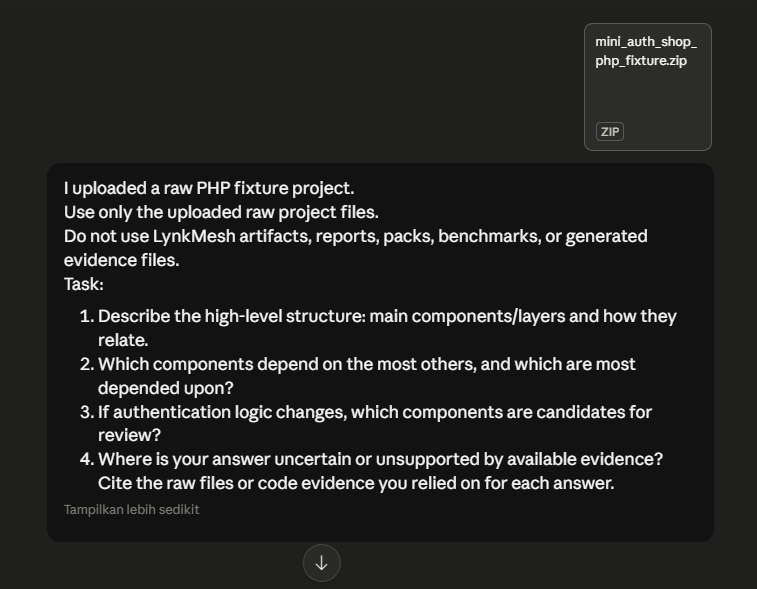
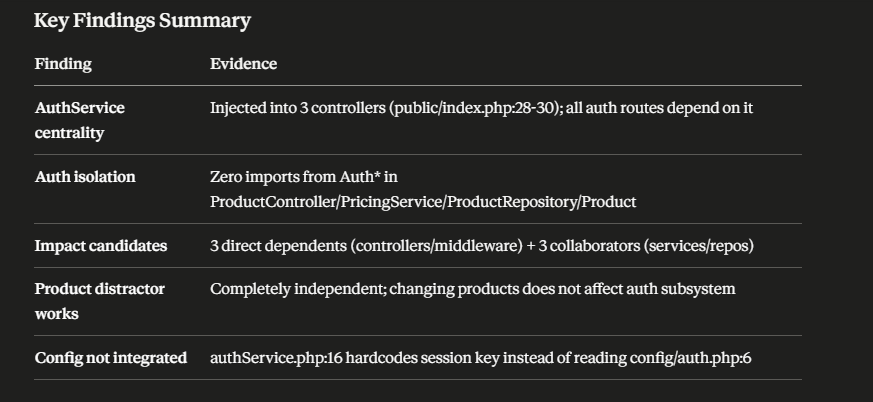
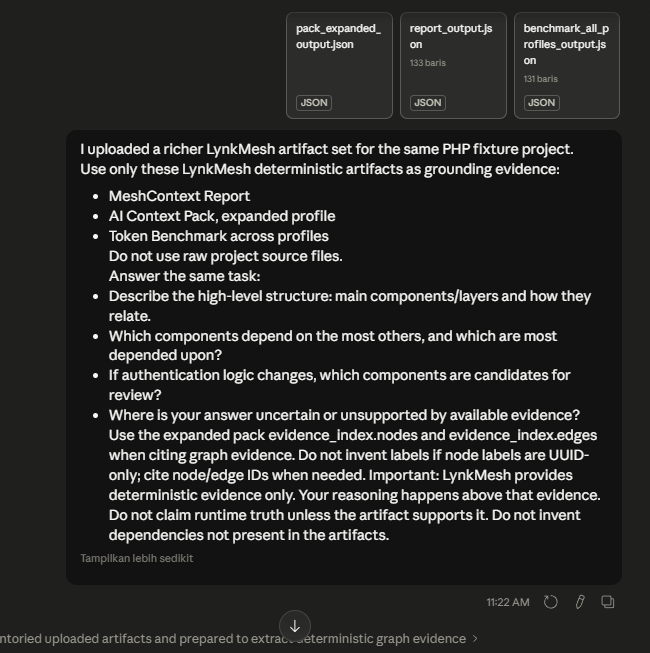
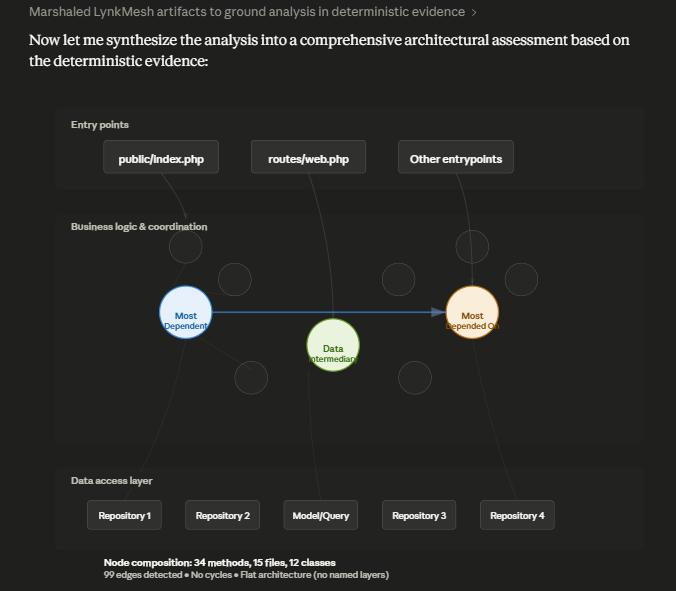
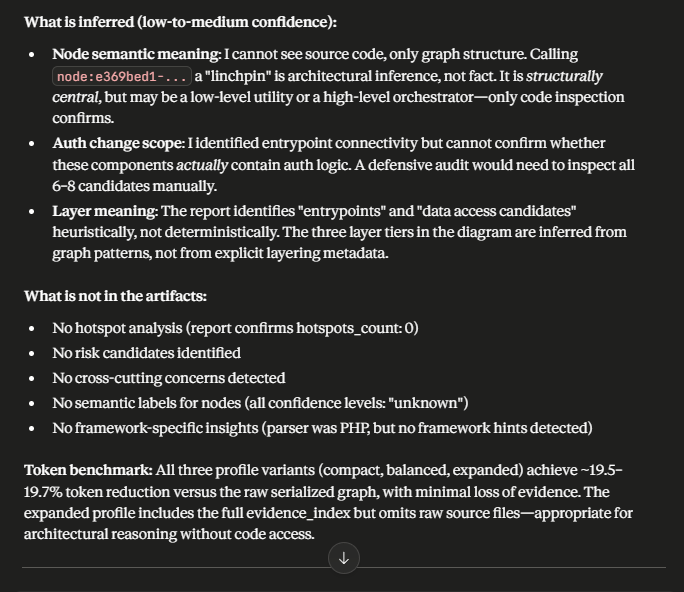
The Before vs. After We’ve been running tests with Claude Haiku 4.5 to see how we can optimize agentic context.
- Before (Raw Fixtures): We fed the agent the raw source files. The analysis was detailed but struggled with “shallow” reasoning. The agent spent too many tokens navigating noise rather than understanding the system.
- After (LynkMesh Artifacts): We transitioned to providing only LynkMesh-generated graph artifacts.
The Result: The AI is now performing graph-level reasoning. Instead of reading text, it’s navigating a deterministic map of the system.
The Best Part? Uncertainty Guardrails. By working with a structured graph, we can now implement uncertainty guardrails. The AI no longer just “guesses”; it understands the topology. If a dependency is unclear or a node isn’t mapped, the agent can signal uncertainty instead of hallucinating a solution.
What’s Next? We are currently working on moving away from UUID-heavy labels to semantic, human-readable components. This will allow for true “Artifact-only” semantic transparency, where the AI can understand a complex system without ever needing to touch the raw source files.
Conclusion The future of AI-native software engineering isn’t in larger context windows; it’s in better data structures. We’re building that infrastructure at [Link ke Repo]. Join us in defining the protocol.